Christopher Houghten · Full-stack developer · Michigan
Software for the work at hand.
More than 30 years building software, from enterprise APIs and data services to useful tools for everyday life.
Experience, current personal projects, and the way I build today.
Experience
Built over time.
I’ve spent more than 30 years building software across the stack. My professional work includes enterprise B2B data services, REST APIs, SQL Server, and an AWS-based scalable product.
A lot of that work happens behind a screen: shaping an API, connecting systems, and getting data where it needs to go. My personal projects give me a place to explore those same interests with tools I can use at home.
API designRESTB2B data servicesSQL ServerFull-stack developmentAWS
Selected personal work
Useful things, built and evolving.
Second Life Home · In use at home · Open source
Making older hardware useful again.
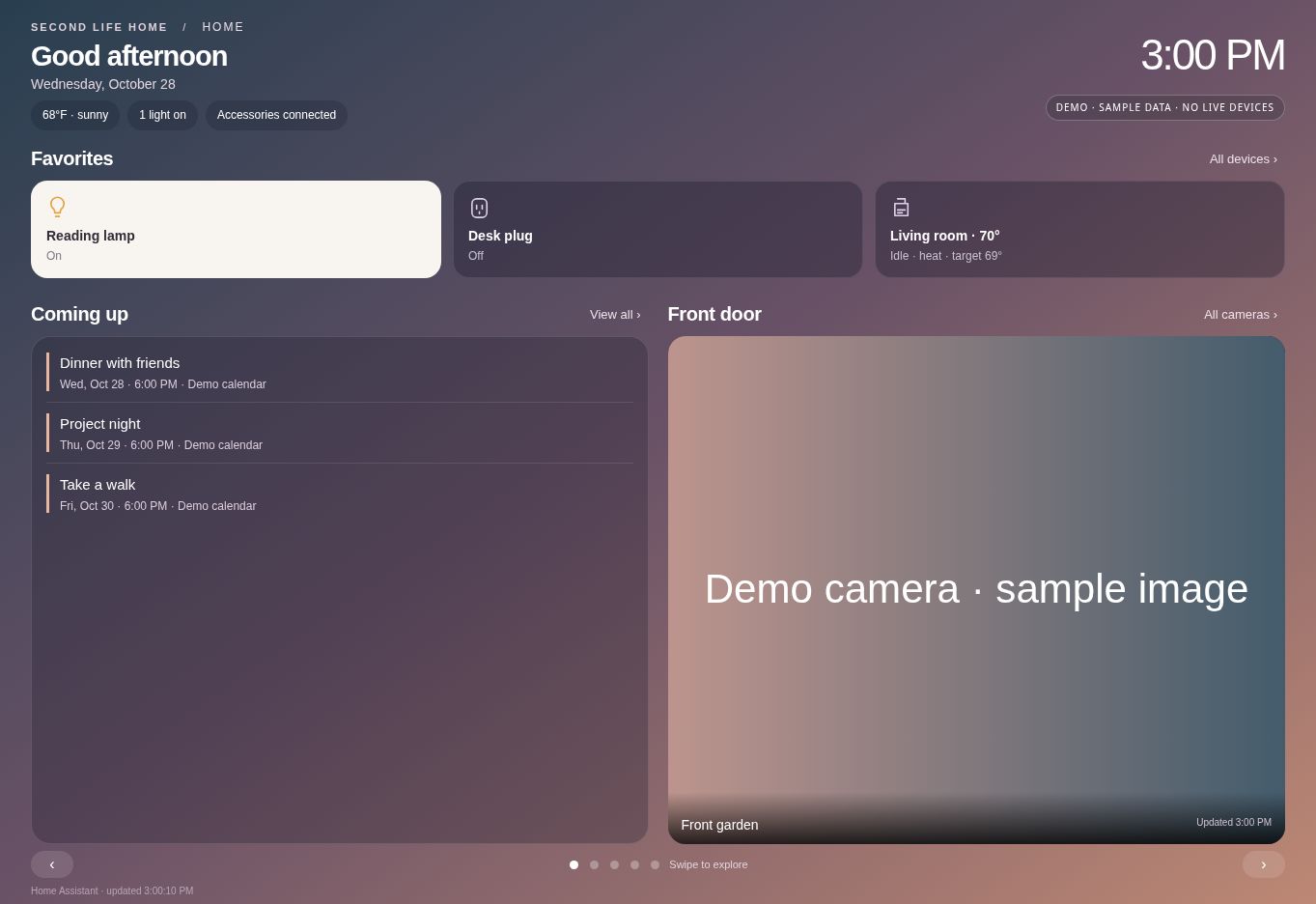
Five iPad 4s were still useful screens, but their aging browsers put modern dashboards out of reach. Second Life Home gives them calendars, camera views, home controls, and music through a lightweight web interface.
The actual dashboard interface, shown with synthetic sample data. The camera image is an illustration; no live home details are displayed.
The engineering: older-Safari-compatible JavaScript and a small Python server connecting to Home Assistant. The server keeps service credentials off the tablets; camera views use formats the older browsers can handle.
My role: I defined the home use case, worked through the design with ChatGPT, and tried it on my own setup. ChatGPT generated the code. The original dashboard was tested on an iPad 4; I have not independently reviewed all generated code or verified every installation path.
Morrow is my local-first AI and automation project. The architecture keeps memory, permissions, device connections, and task state separate from any single language model.
The engineering: separating heavier AI work from everyday home services and from Tower’s storage and backup responsibilities. Home Assistant and the dashboard are already in use; the broader knowledge, voice, and tool-coordination system continues to evolve.
My role: setting the goals, working through the architecture, and developing the system around my own home and workflows. This is an ongoing personal project.
A poker tournament timer keeps rounds and blinds in view. Euchre tools help with tournament rotations and scorecards. Both are examples of software built around a concrete activity and the information people need while doing it.
Old tablets, existing home services, data APIs, and stored archives all bring constraints. Those constraints help define the architecture: what belongs in the browser, what needs a server, and which pieces should run independently.
Use AI as part of the process.
I use ChatGPT to develop ideas, generate code, and iterate on personal projects. I bring the use case, context, and decisions about what to try. Project notes distinguish what has been tried on my setup from what remains a plan or needs more verification.
Keep a record of what changes.
The project pages hold the longer stories. The Workbench keeps shorter notes about decisions, progress, and next steps.
My earlier portfolio preserves a selection of websites and projects from previous years. It is a historical snapshot; the current work above is a better introduction to what I’m building today.